Cherry Hill firefighting water damage specialists
Dry the water left after the fire
After the fire is out, trapped water can keep damaging floors, walls, and insulation.
Cherry Hill firefighting water damage specialists
After the fire is out, trapped water can keep damaging floors, walls, and insulation.
Firefighters may save the house and still leave hundreds or thousands of gallons of water inside it. In Cherry Hill homes with finished basements, older subfloors, plaster walls, and layered flooring, that water can travel into areas that look untouched from the doorway.
Drying after a fire is different from a plumbing leak. The water may mix with soot, ash, insulation, charred material, and debris. Materials can need both drying and contamination review before anyone decides what stays and what comes out.
Moisture readings matter because damp insulation, wet subfloor, and soaked wall cavities can create mold risk while the fire claim is still being negotiated. A contractor should check under cabinets, behind baseboards, around stair openings, below the fire room, and inside any basement or crawlspace below the water path.
The repair scope should separate smoke damage from water damage without losing either one in the claim. Camden County homes with older finishes may need selective demolition to expose wet materials before drying equipment can do its job.
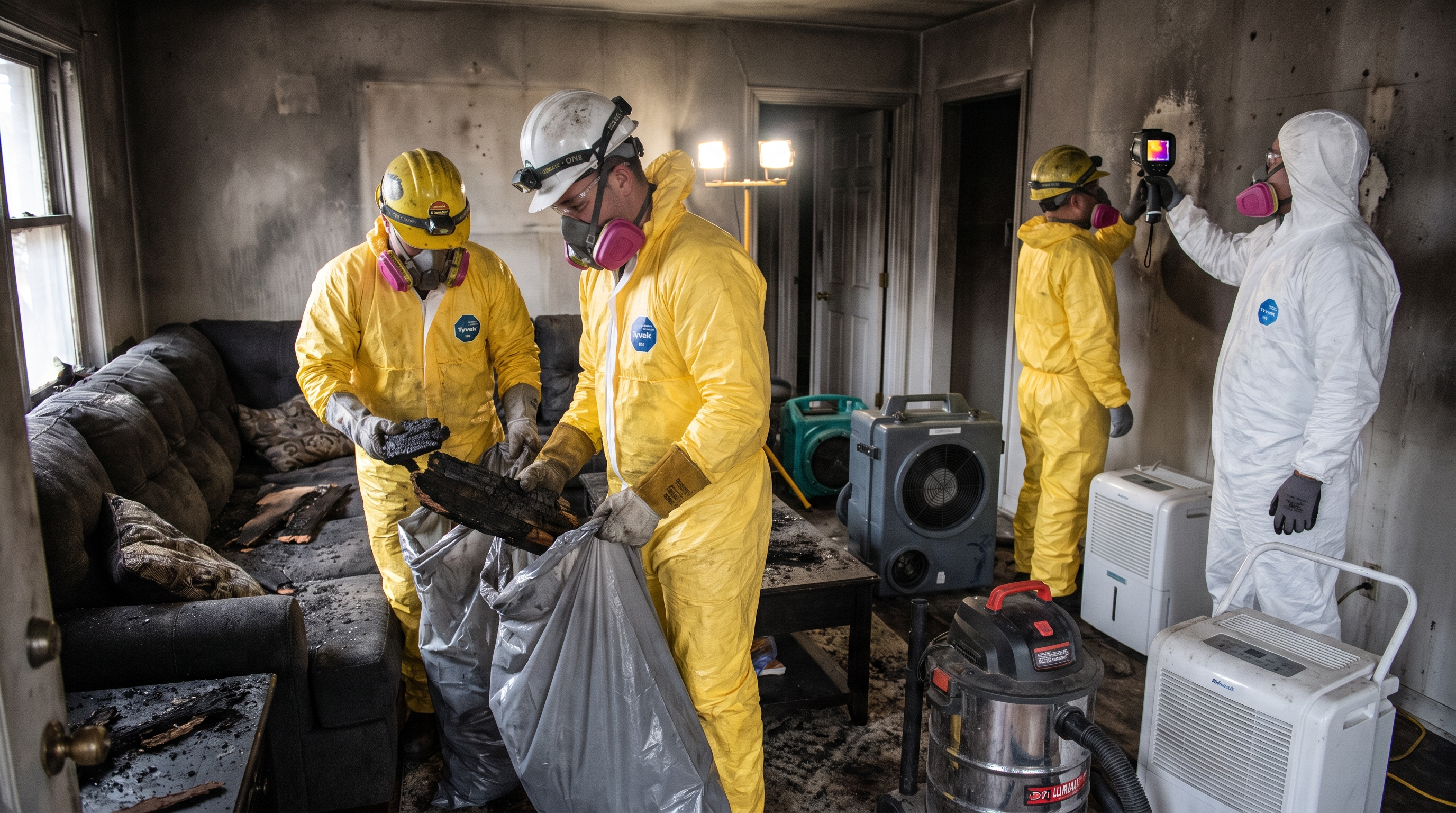
Firefighting water cleanup documents wet materials, removes unsalvageable items, and dries the structure before rebuild.
The contractor uses meters and inspection cuts where needed to find wet drywall, plaster, insulation, subfloor, framing, and basement finishes. Readings help show the difference between surface dampness and trapped water.
Standing water is removed, wet materials are opened, and drying equipment is placed based on the room layout. Dehumidifiers and air movers need enough access to move moisture out of hidden spaces.
Water that passes through ash, soot, or burned debris may require removal of porous materials. The contractor documents what is dried, cleaned, removed, and replaced.
The contractor match accounts for both damage categories so water cleanup does not get lost behind the smoke claim. That record can matter during carrier review.
Cherry Hill homes often have finished lower levels or layered flooring where water can hide. The inspection follows the water path instead of the burn pattern.

Do not wait for wet materials to smell before asking for drying help.
Free — no obligations
The contractor tracks where hose water entered, pooled, drained, or traveled below the fire area.
Standing water is removed and affected materials are opened where needed to expose trapped moisture.
Equipment is placed and moisture readings are checked until materials reach an acceptable dry standard.
The drying work, removed materials, and remaining repair needs are documented for the fire claim file.